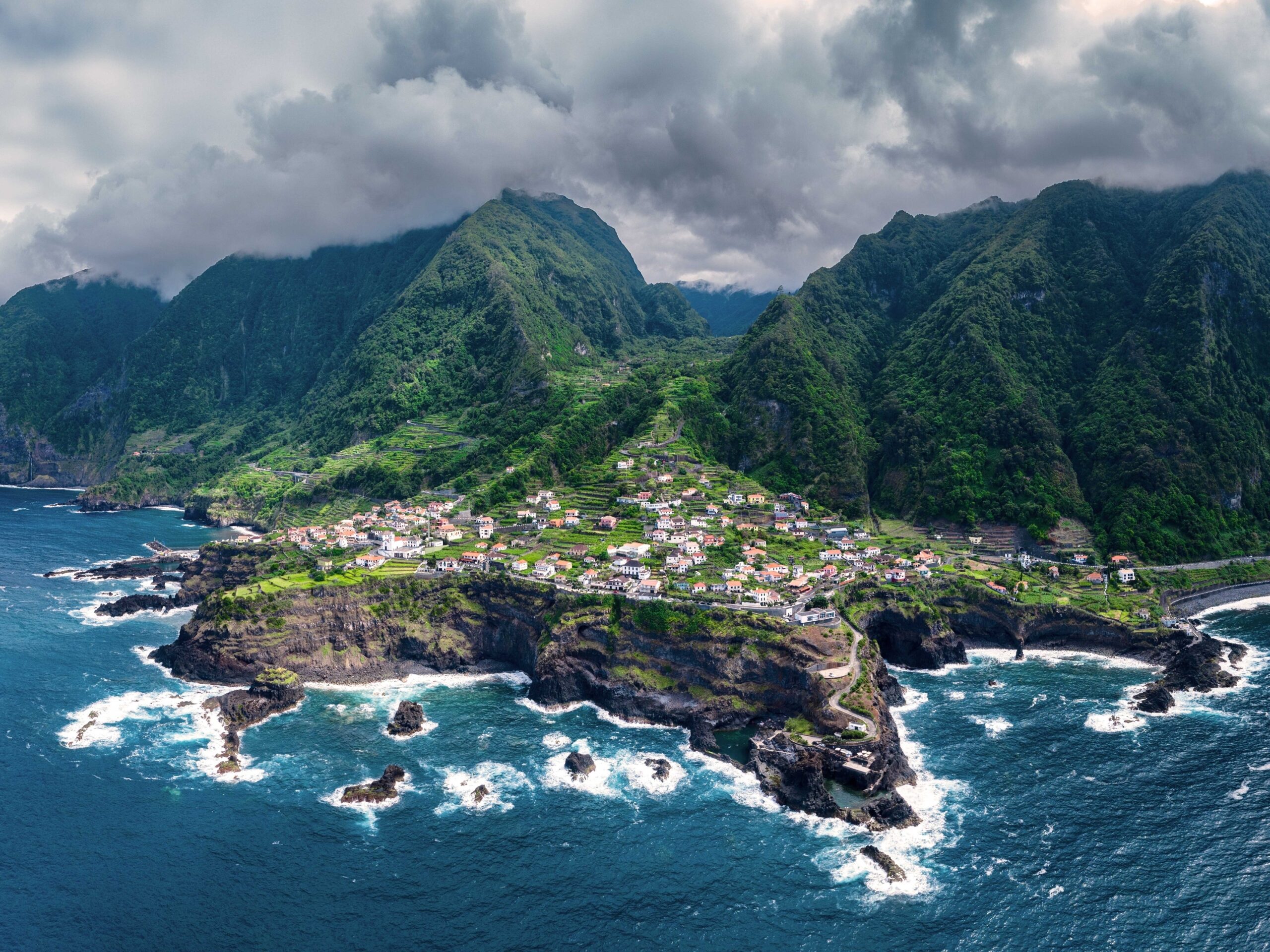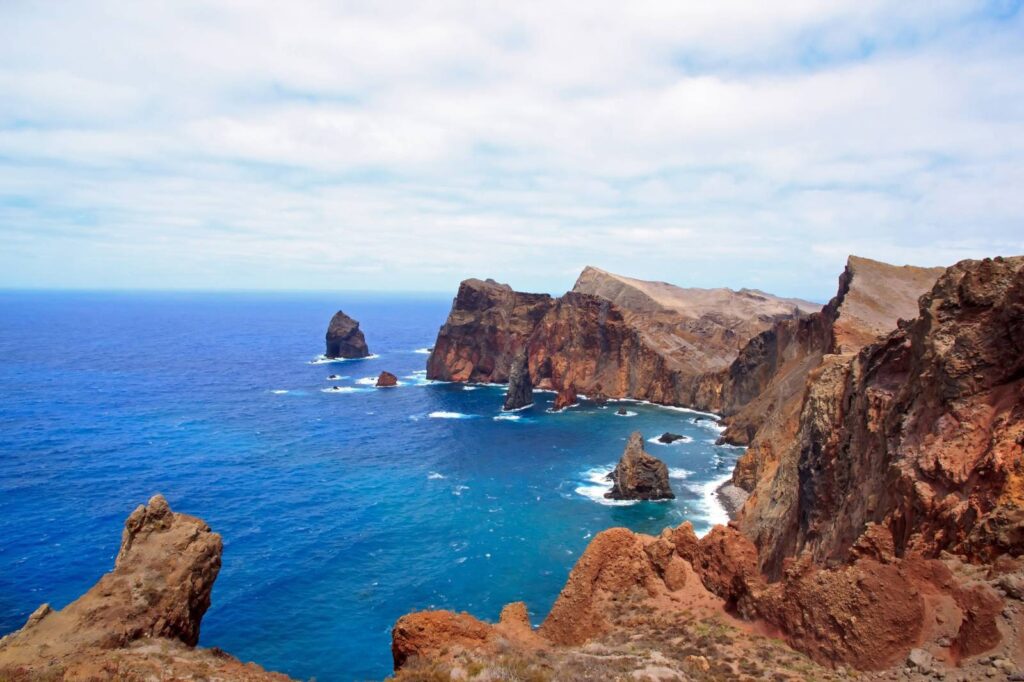

Madeira is not the Algarve. Most of its coastline is volcanic — dark pebble, black lava rock, and dramatic sea platforms rather than fine white sand. That’s not a flaw; it’s what makes the water unusually clear, the settings genuinely striking, and the beaches far less crowded than Mediterranean alternatives at the same latitude. This guide covers every type of swimming spot on the island.
🏖️ Quick Reference by Profile
- Families: Calheta (sandy, calm, lifeguarded), Lido Funchal (managed, central), Banda d’Além Machico (sheltered, quiet)
- Snorkelling: Garajau Marine Reserve (best visibility on the island), Porto Moniz pools (safe for beginners)
- Sunset: Calheta — west-facing, sandy, beach bars, best late-afternoon light on the island
- Without a car: Lido Funchal (walkable), Garajau (cable car €5), Doca do Cavacas (taxi or bus)
- Off-track: Seixal, Poças das Lesmas, Prainha, Ribeira do Natal, Poço dos Chefes
- Sandy beaches: Calheta and Machico (imported sand) — Porto Santo for 9km of natural golden sand
📑 Quick Navigation
Setting the Right Expectations
Two categories of swimming spot exist and they’re easy to confuse. Natural lava pools are formed by volcanic rock — free, open access, no infrastructure. They require care: rock is often slippery, wave conditions vary, and there are no lifeguards. Managed balneares charge entry and offer changing rooms, showers, cafés, sun loungers, and lifeguard cover.
Madeira has exactly two sandy beaches — Calheta and Machico — both created with sand imported from Morocco. For sand at real scale, Porto Santo island (40-minute ferry or 15-minute flight) has nine kilometres of natural golden sand and warm, shallow water.
For sea temperatures and swimming conditions by season, see our piece on island location and climate. For how beaches fit into a broader trip, see what else is worth your time.
Funchal & the South Coast
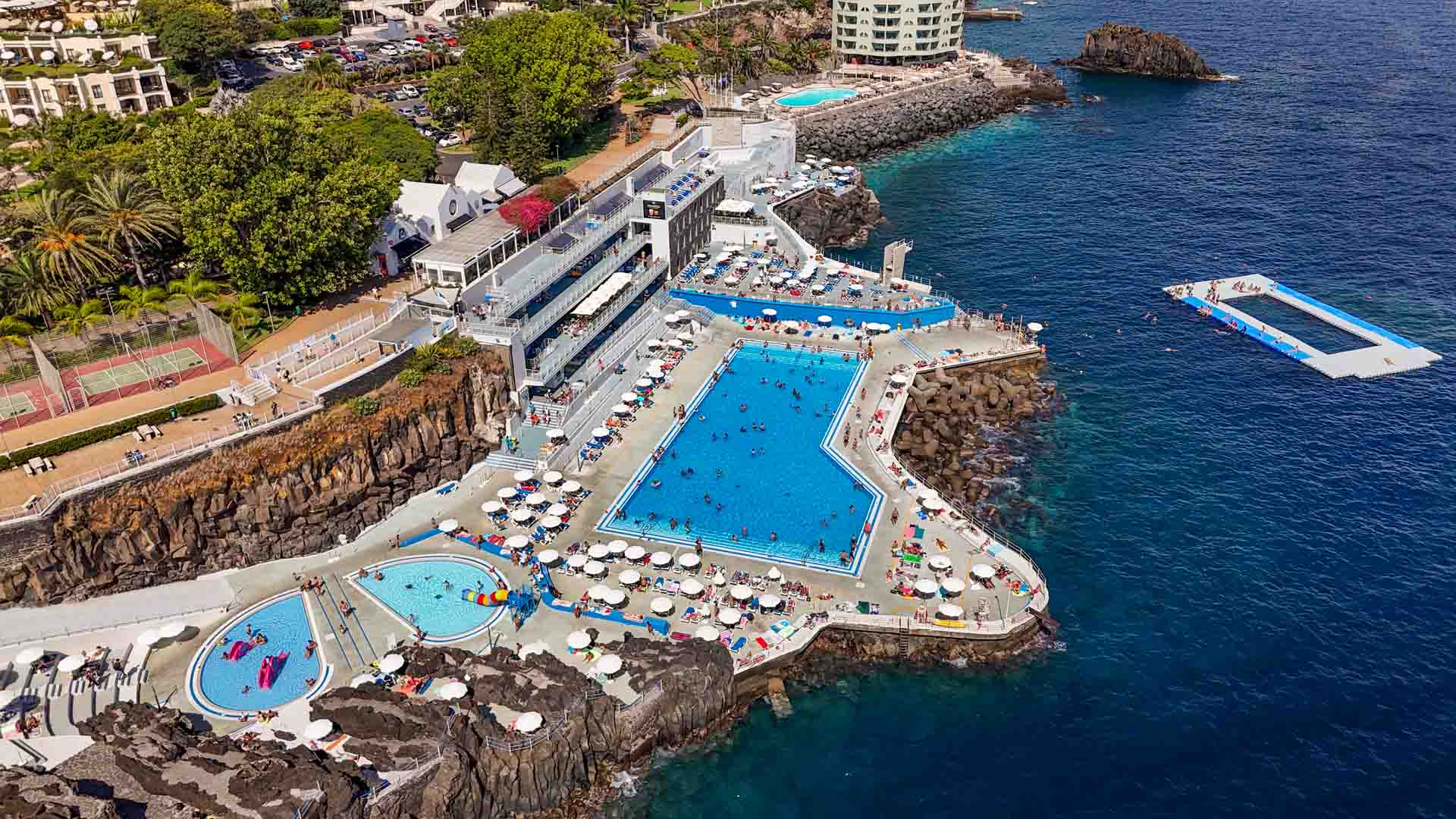
The most accessible swimming option from Funchal city centre — walkable from most hotels in the tourist zone. Sea-filled and freshwater pools, sunbeds, restaurant, changing rooms, and lifeguard cover. Direct sea access via platform.
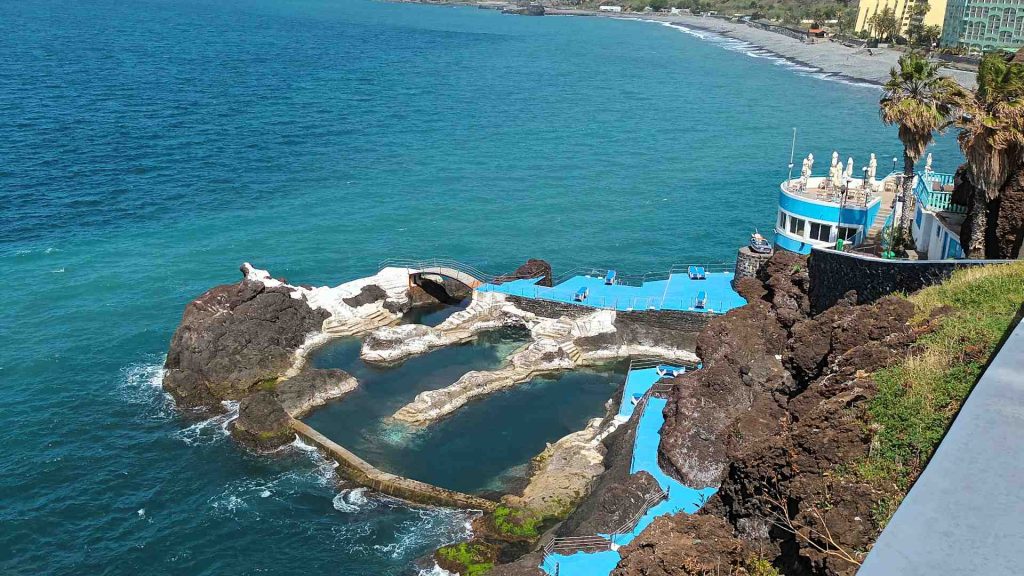
A carved lava rock platform west of Funchal, managed but less formal than the Lido. Seawater pools formed naturally in the volcanic rock, topped up by wave action. Popular with Funchalenses who know the city’s swimming spots well.
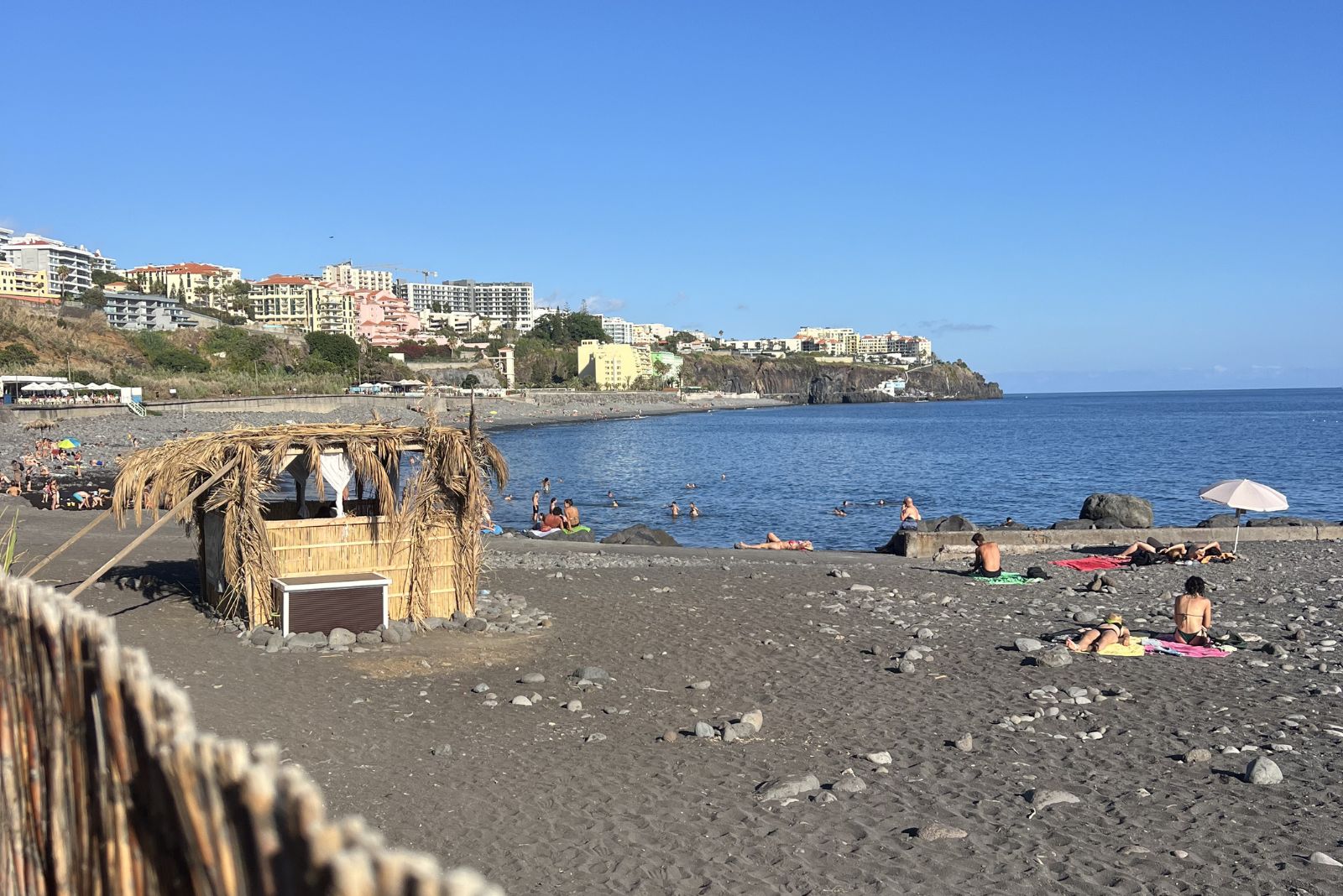
The longest beach on the south coast — a long stretch of dark pebble just west of Funchal, free and open. No managed infrastructure, but cafés and restaurants line the promenade directly behind. A good option for an evening walk or a swim without paying for a complex.
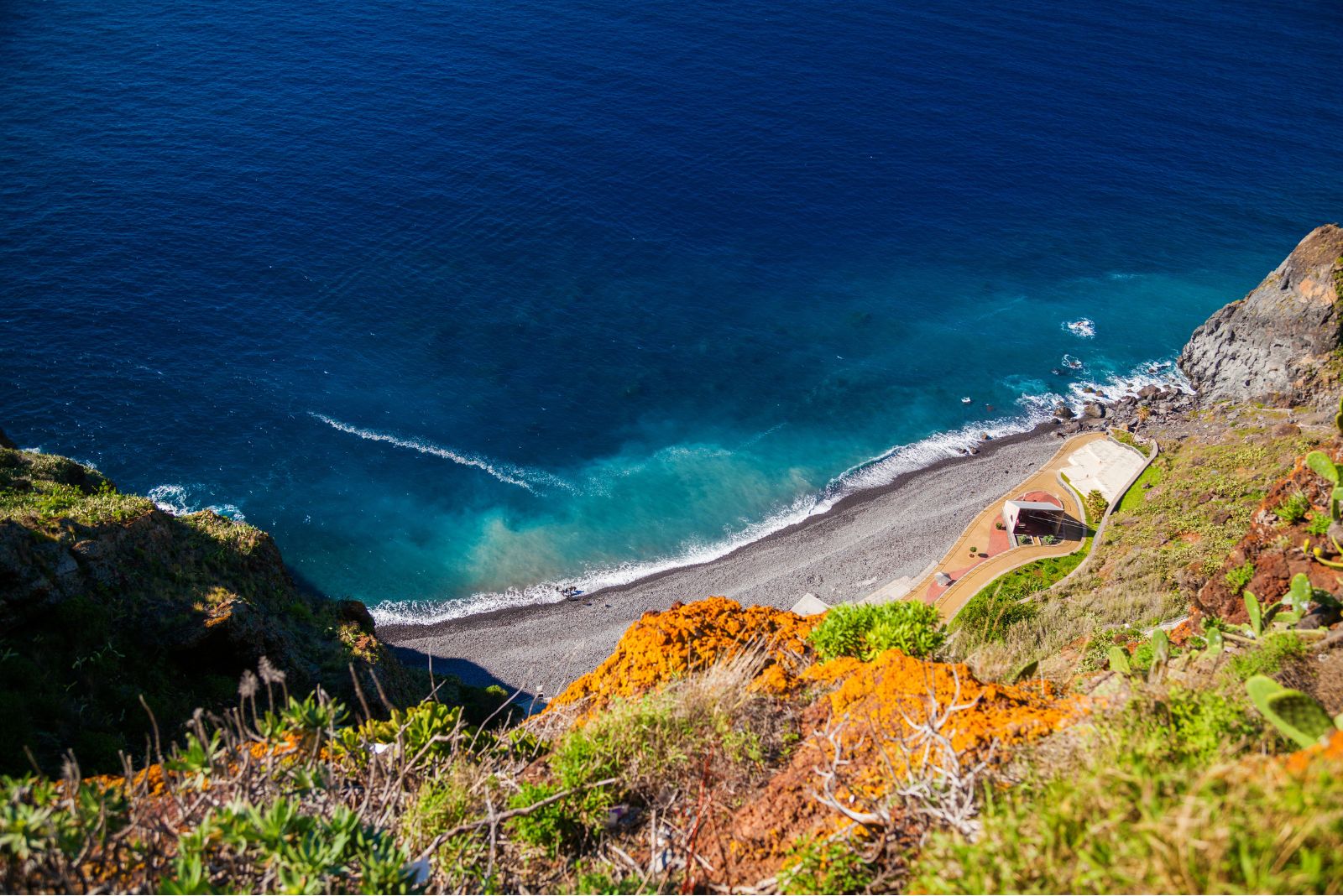
Located below the Christ statue at Garajau, accessible by cable car from the road above or on foot. The beach sits within the Garajau Marine Reserve — protected waters that prohibit fishing and limit boat traffic. The result is exceptional snorkelling visibility and more marine life than anywhere else on the south coast.
Dark pebble beach. The cable car makes this one of the few off-centre beaches reachable without a rental car.
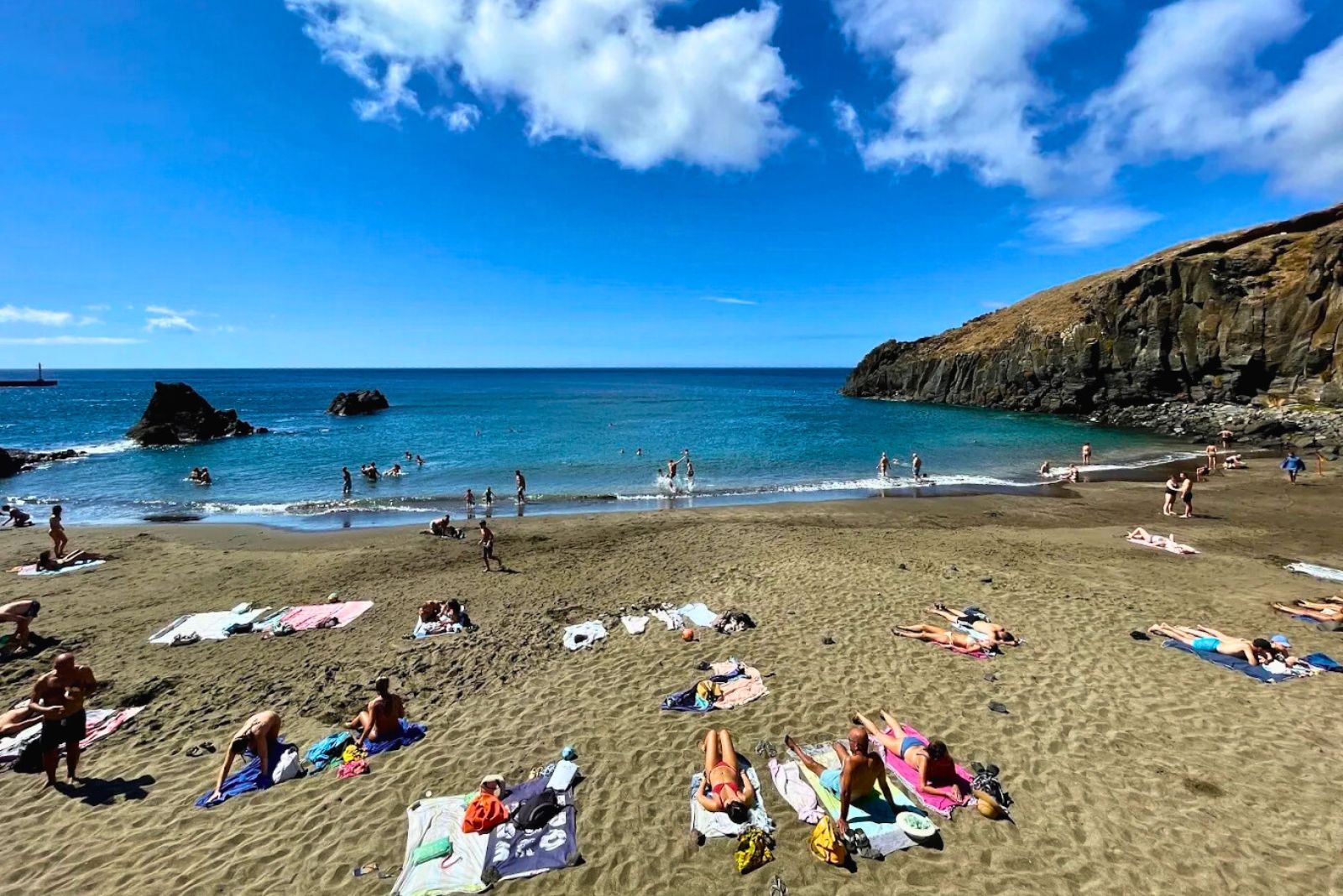
A small, sheltered cove east of Funchal and one of the only natural (non-imported) dark sand beaches on the island. It requires a little effort to reach — that’s exactly why it stays quieter. Limited facilities; the appeal is the setting and the fact that it hasn’t been developed.
For a comparison of east coast options against the west, see our guide on west vs east Madeira.
West Coast
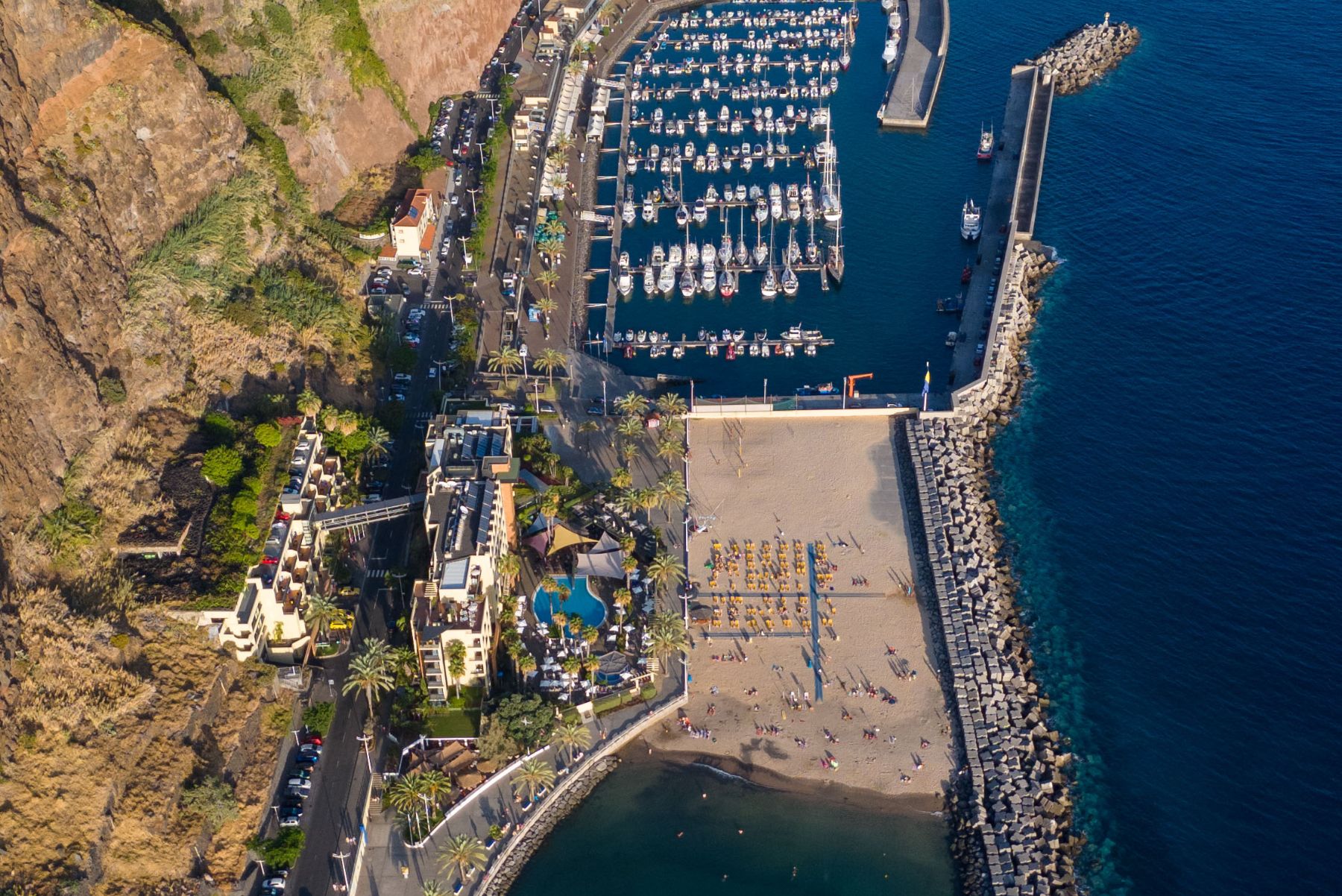
Madeira’s most popular sandy beach — and the closest the island gets to a classic Mediterranean beach experience. The imported Moroccan sand sits in a calm, protected bay with lifeguard cover, beach bars, watersports rental, and shallow entry. West-facing, which makes it the best sunset-watching beach on the island.
For families with young children, this is the default recommendation. Sand underfoot, calm water, and everything you need within reach. See our family adventures guide for more on the west coast with children.
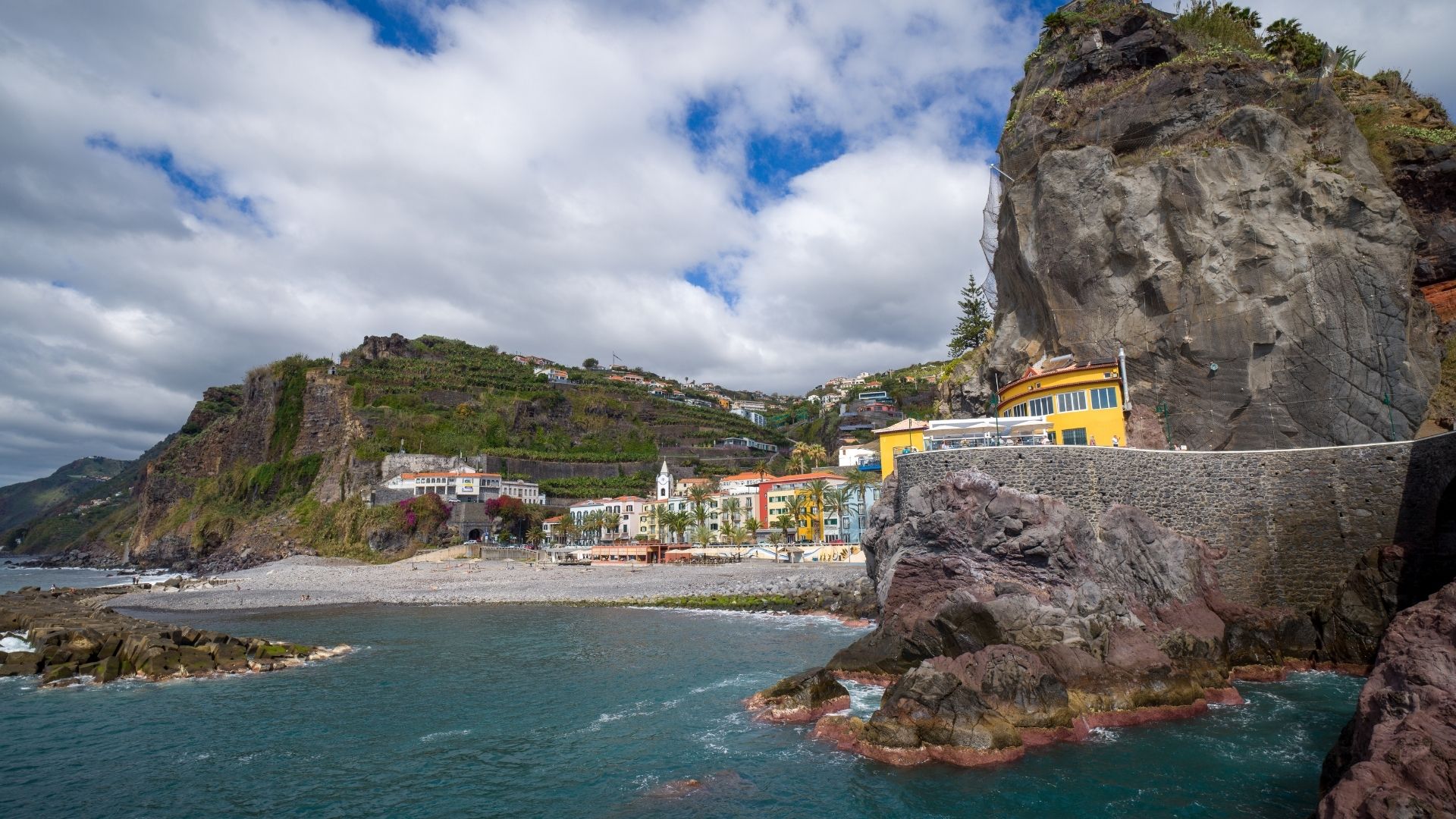
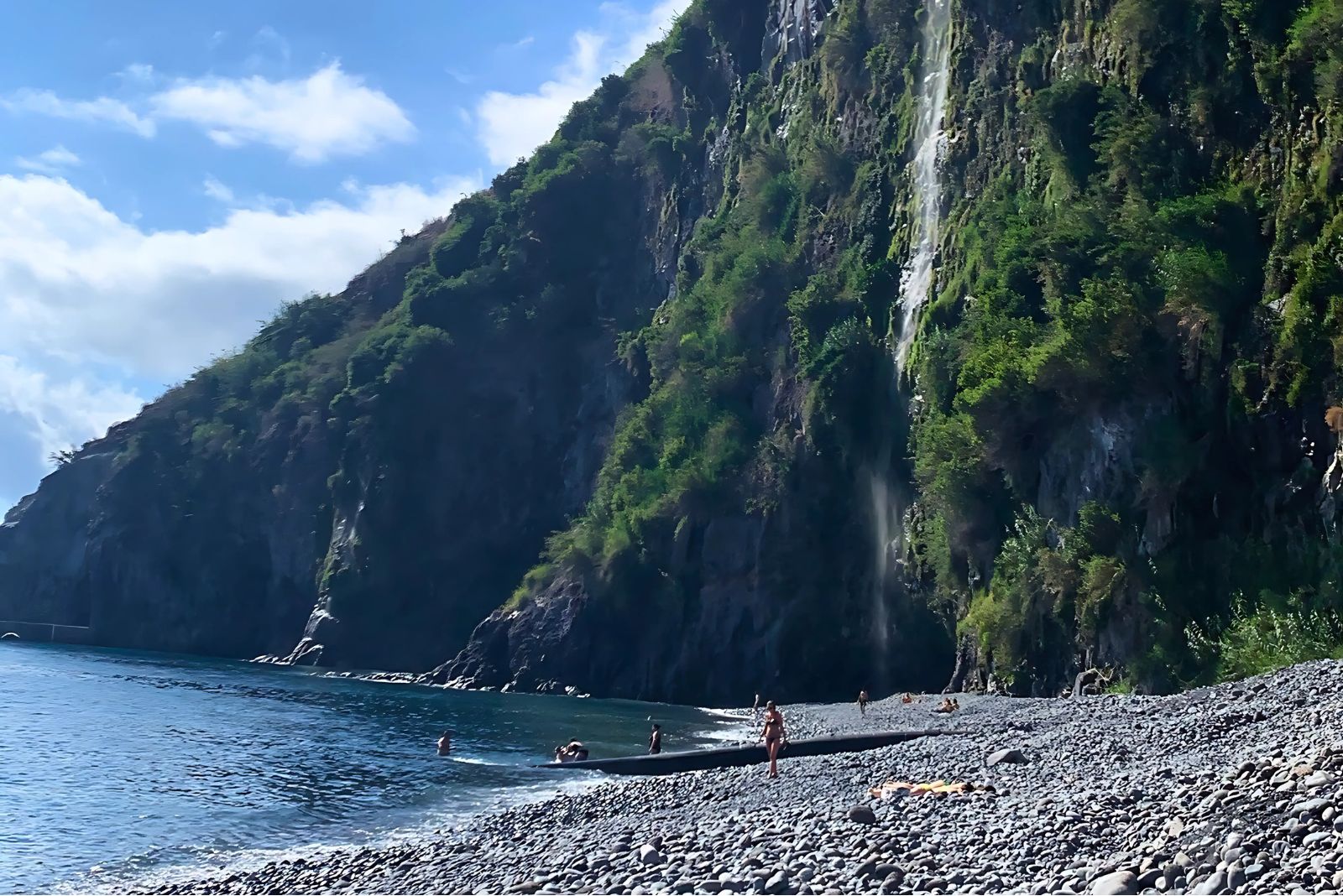
Ponta do Sol records more sunshine hours than anywhere else on the island. Praia dos Anjos is the small pebble beach below the cliffs — used mainly by locals, minimal facilities, calm atmosphere, and the village directly above with excellent lunch options. Worth a half-day combining beach and village.
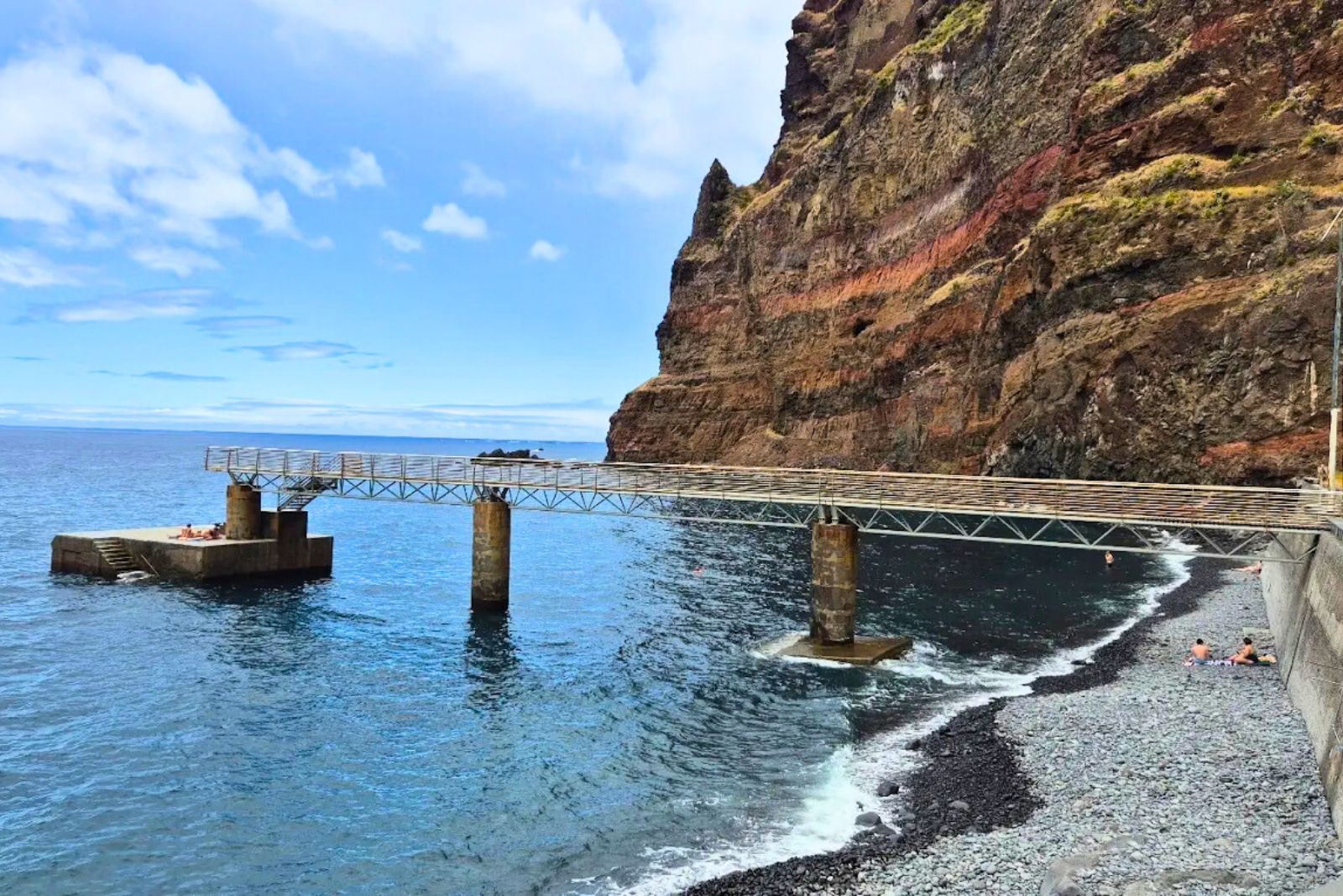
A small pebble beach in a quiet coastal settlement between Ponta do Sol and Calheta. Less visited than either neighbour, which is precisely its appeal. No major facilities but authentic village atmosphere and good swimming when conditions allow. Worth a stop if you’re driving the south coast rather than rushing straight to Calheta.
Known for its wave break, not its swimming. The setting is beautiful, the village is charming, but this is not a place to bring non-swimmers or young children expecting calm water. Come for the atmosphere and the views, not the swim.
North Coast
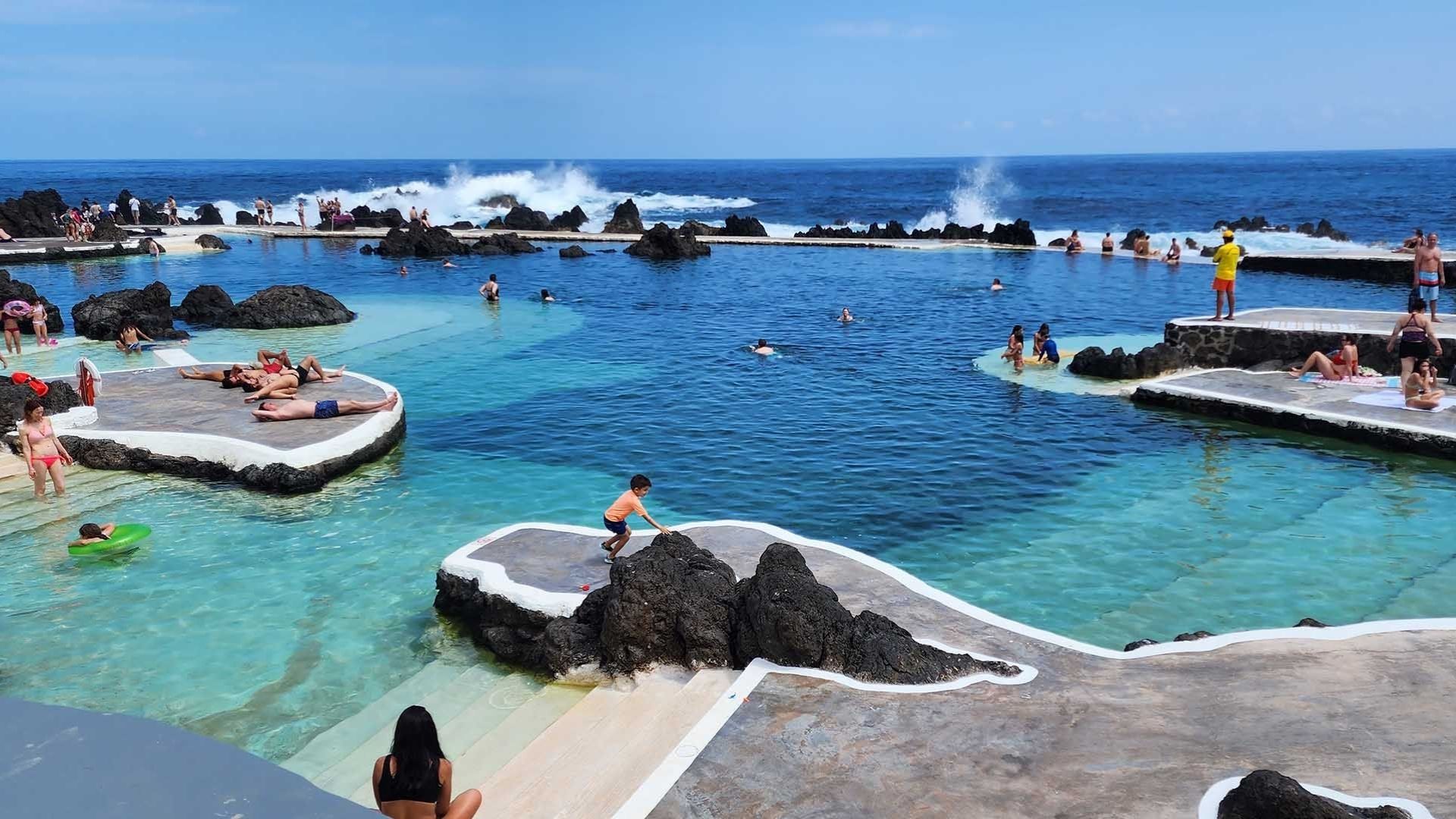
The most photographed natural pools in Madeira. Volcanic lava formations create a series of sheltered pools along the coastline — the Atlantic surges outside while the pools themselves stay calm and safe. Two managed complexes with changing rooms and cafés.
Go early or late to avoid the heaviest tour group traffic — Porto Moniz is on almost every island day-trip itinerary and gets congested mid-morning.
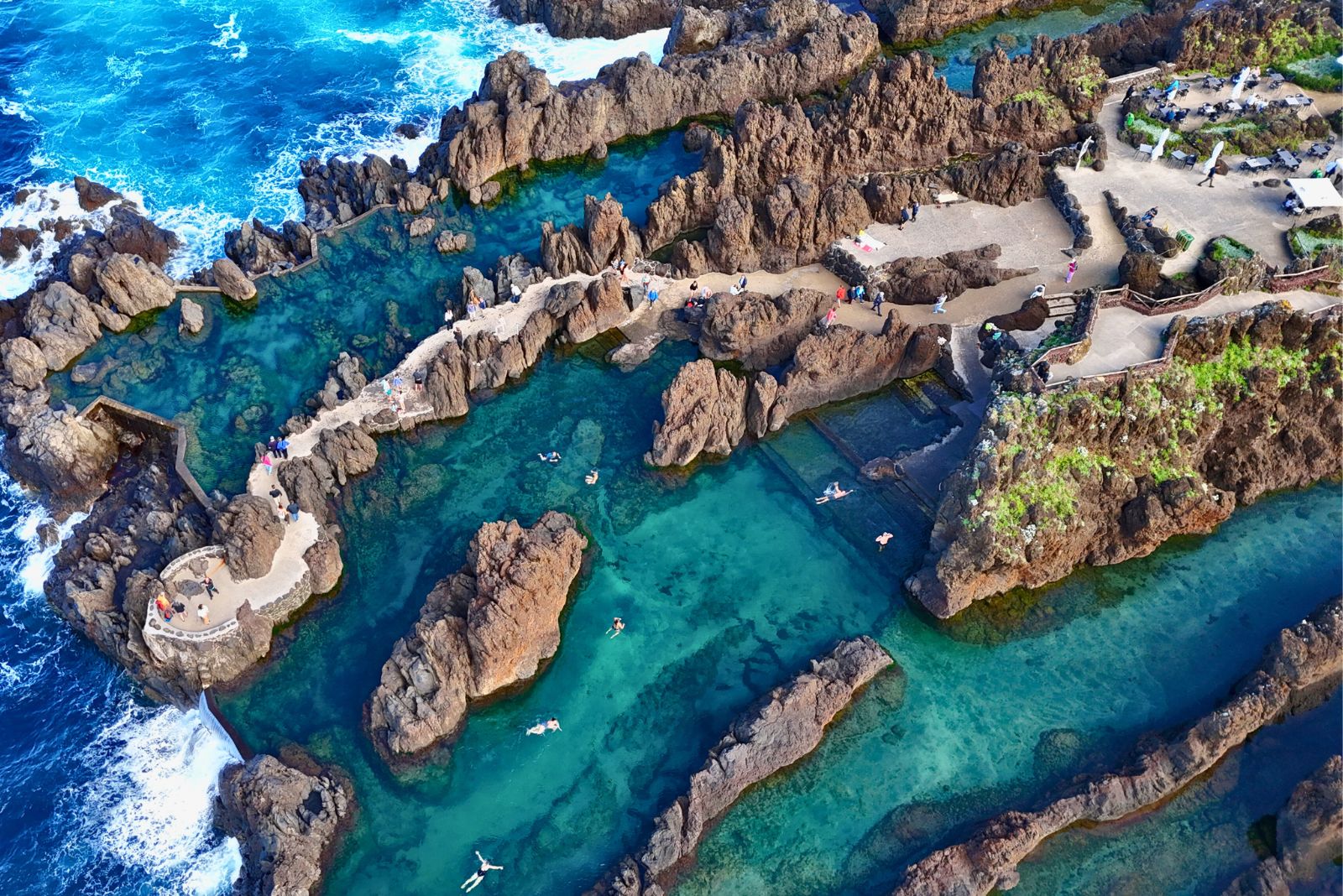
Just beside the Cachalote restaurant, the original older pools are free to access — less manicured than the managed complexes, rawer, and often less crowded. A genuine alternative for anyone happy to forgo changing rooms and sun loungers in exchange for no entry fee and a wilder feel.
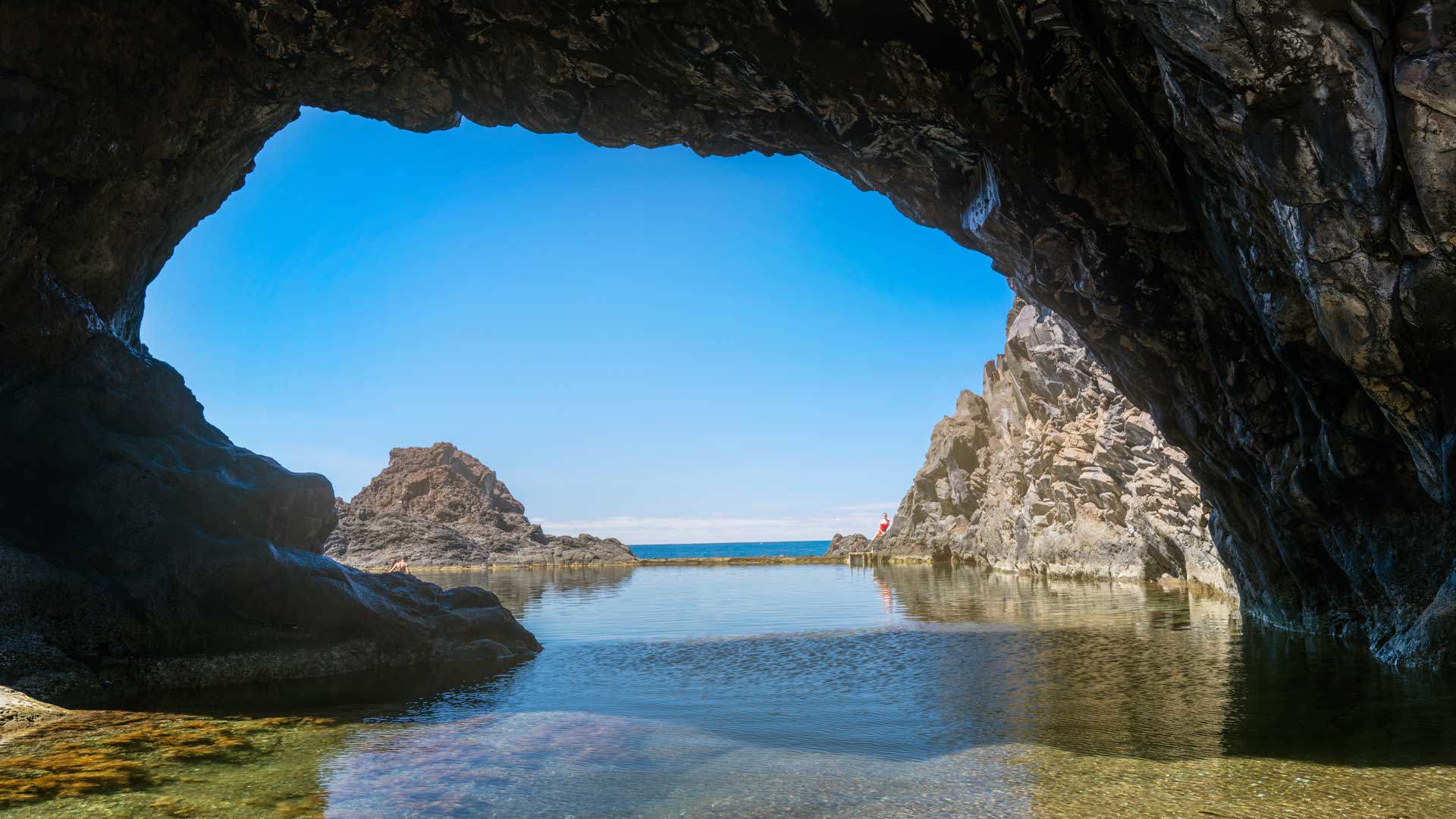
Natural lava pools carved into the rock at sea level, just east of Seixal village. Free, no facilities, no lifeguard. Less known than Porto Moniz but with a rawer, more dramatic setting — basalt cliffs above, Atlantic directly in front. Popular with locals in summer, almost invisible in tourist content.
Combine with Seixal black sand beach nearby — both are walkable from each other.
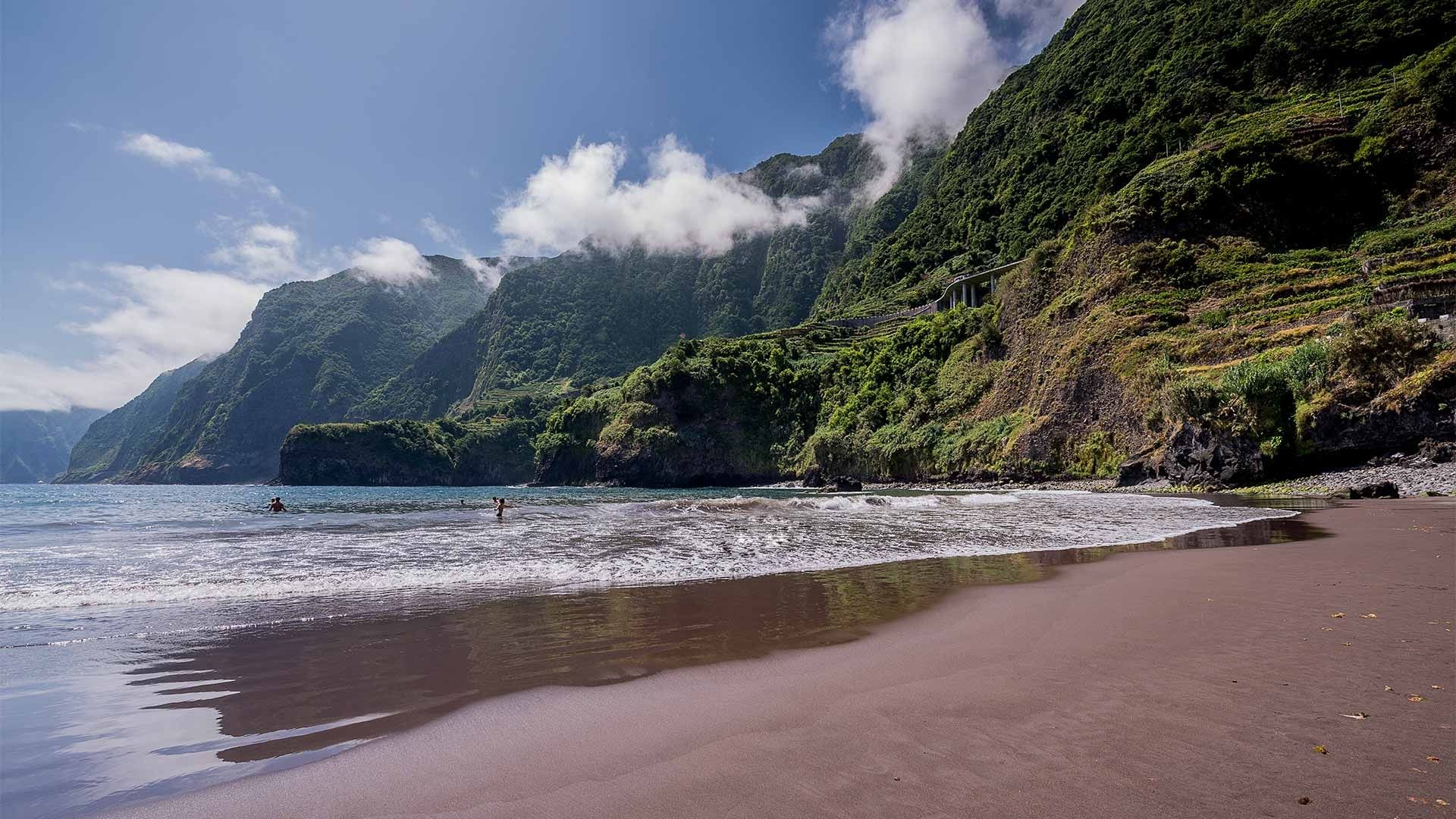
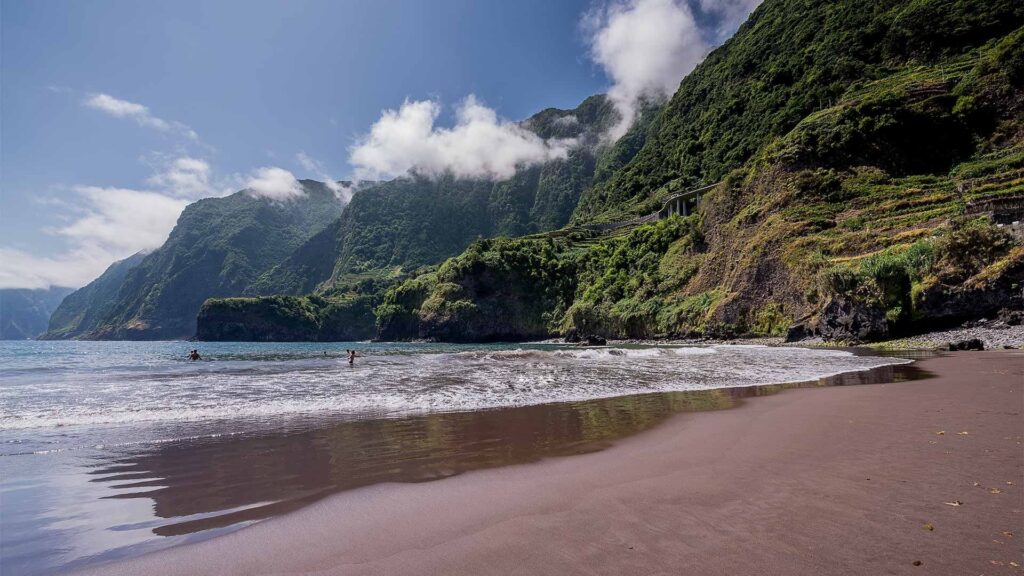
A small beach of dark volcanic sand below basalt cliffs — no facilities, no management, and waves that can be significant. Come for the scenery. Check sea conditions before entering the water; this is not a swimming beach in the same sense as Calheta or Porto Moniz.
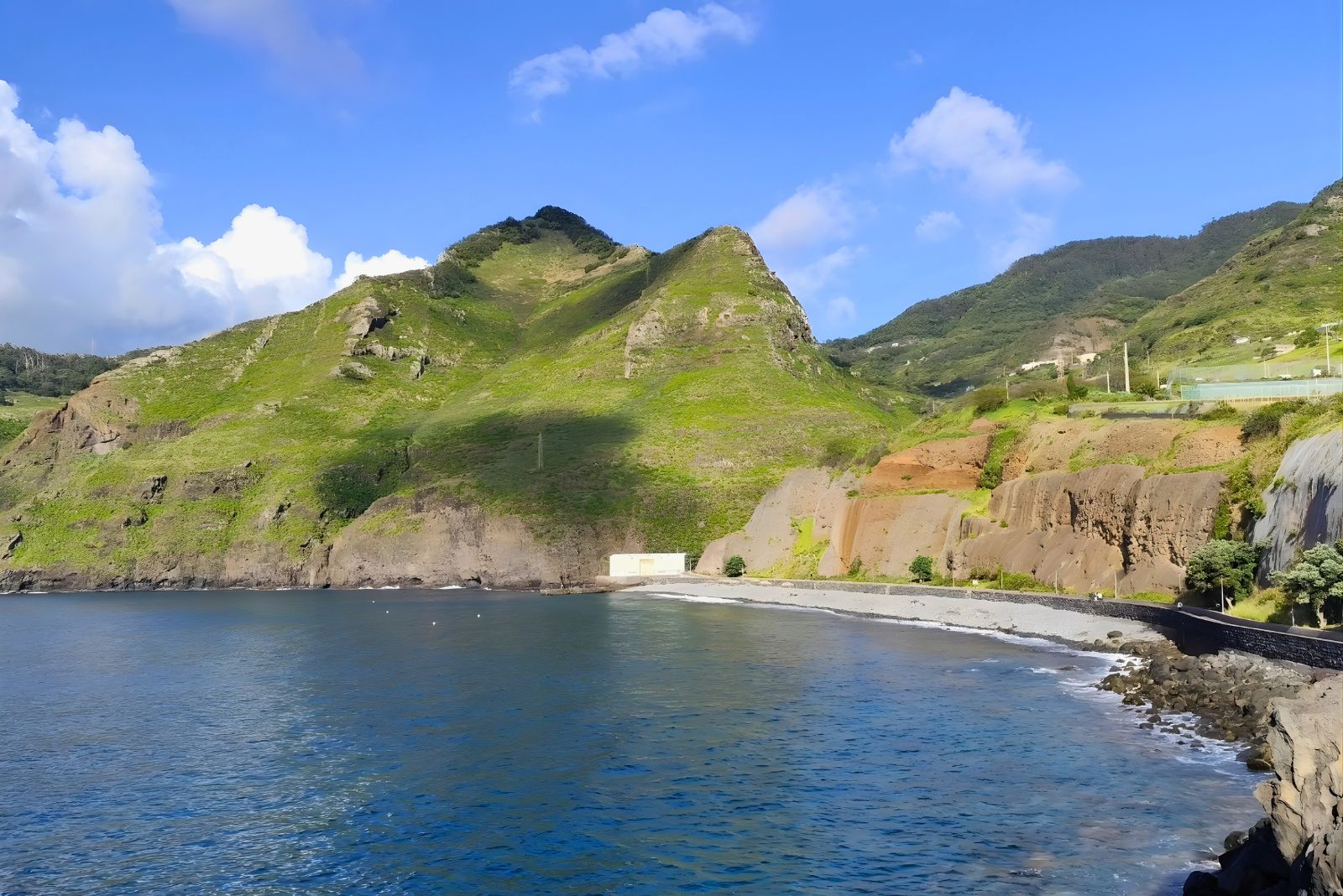
A small beach at the mouth of a river valley on the north coast, accessible via a narrow road. Seasonal — best visited in summer when conditions are calmer and river flow is lower. Almost entirely absent from tourist itineraries, which keeps it genuinely quiet. No facilities, no lifeguard; bring everything you need. Worth the effort if you’re already exploring the north coast between São Jorge and Santana.
East Coast
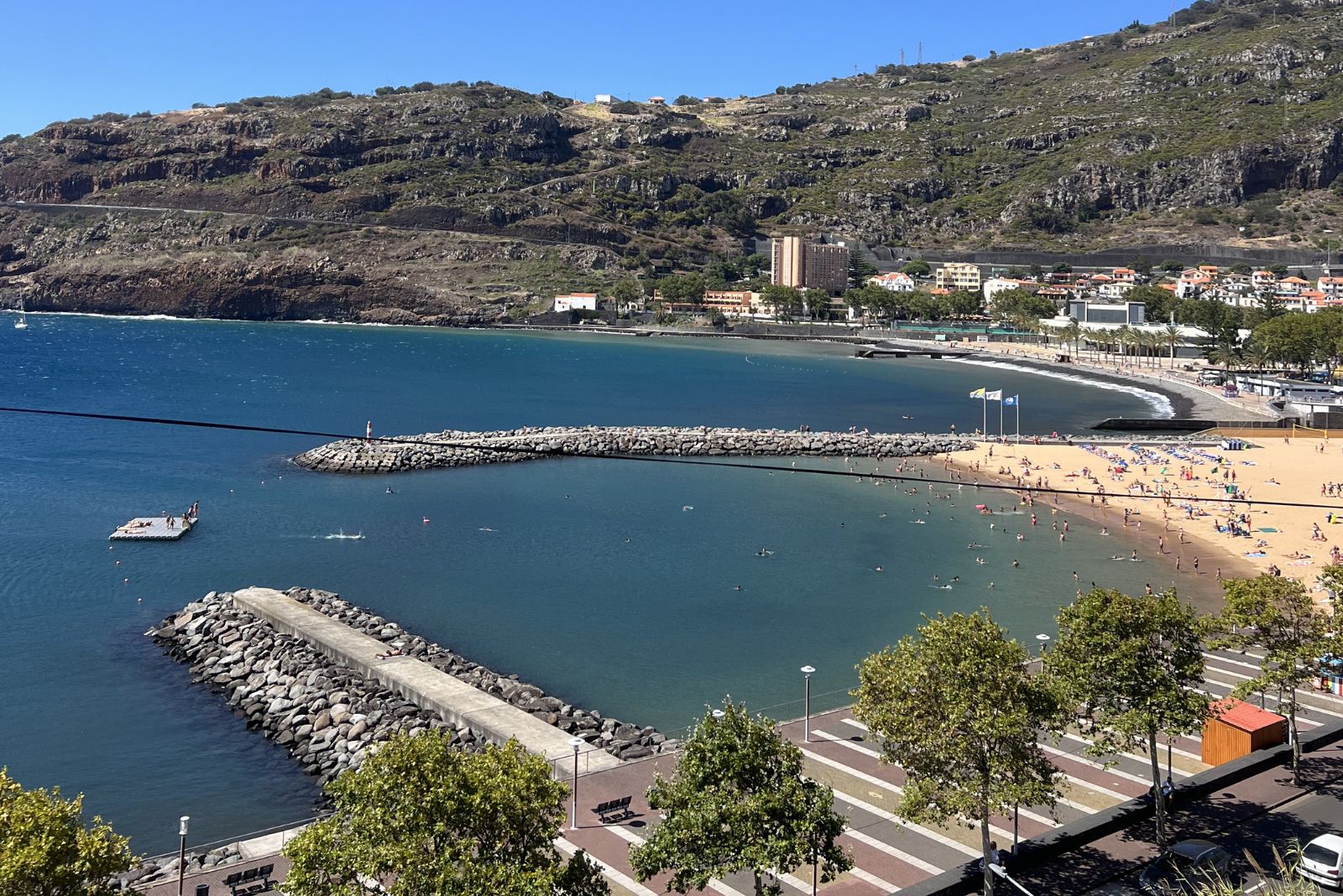
One of Madeira’s two sandy beaches (imported sand, as with Calheta), set within the bay below Machico town. More sheltered than Calheta, with town amenities — cafés, restaurants, shops — directly behind. Less scenically striking, but more authentic; this is where Machico residents actually swim.
The smaller beach on the opposite side of Machico bay. Sheltered, calm, good for children, and unpretentious. If Machico is your base, this is worth knowing about. See our family adventures guide for east coast options with children.

A sheltered pebble beach near Caniçal, within easy reach of Machico. Calmer and quieter than Machico town beach, with fewer tourists and a more local feel. Good option if you want to swim on the east coast without the summer crowds.
The Hidden Gem — Poço dos Chefes
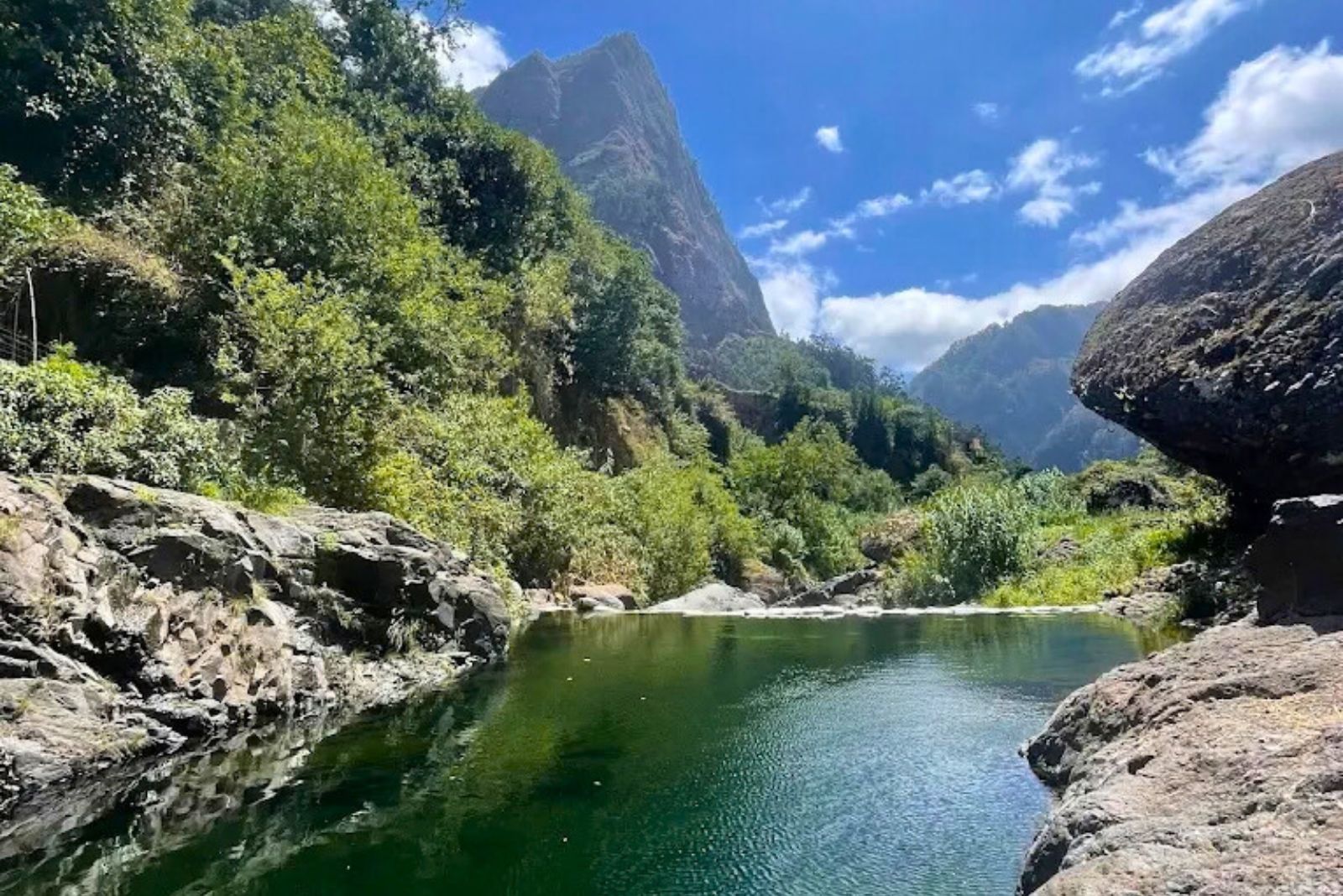
A natural freshwater pool in a river canyon in the island’s interior. Cold, clear, and reached by a short walk from the road. Popular with locals in summer and almost entirely absent from tourist content — which is why it’s still worth seeking out.
All Beaches at a Glance
| Beach | Type | Best for | Entry |
|---|---|---|---|
| Lido Funchal | Managed complex | Families, central | €6 |
| Doca do Cavacas | Lava pools | Locals, less formal | €6 |
| Praia Formosa | Pebble | Free, long stretch | Free |
| Garajau | Pebble + marine reserve | Snorkelling, no car | Free + cable car €5 |
| Prainha | Natural dark sand | Quieter, local | Free |
| Calheta | Sandy (imported) | Families, sunset | Free |
| Ponta do Sol / Praia dos Anjos | Pebble | Sunshine, village | Free |
| Madalena do Mar | Pebble | Quiet, local | Free |
| Porto Moniz (managed) | Lava pools | Families, iconic | €3 |
| Porto Moniz (old pools) | Lava pools | Free, rawer | Free |
| Poças das Lesmas | Natural lava pools | Dramatic, off-track | €2.50 |
| Seixal beach | Black sand | Photography | Free |
| Ribeira do Natal | Pebble | Hidden, summer only | Free |
| Machico | Sandy (imported) | Families, town | Free |
| Banda d’Além | Pebble | Calm, sheltered | Free |
| Pedra da Eira | Pebble | Quiet east coast | Free |
| Poço dos Chefes | Freshwater pool | Hidden gem, interior | €2.50 |
Frequently Asked Questions
Does Madeira have sandy beaches?
Yes — two. Calheta on the west coast and Machico on the east both have sandy beaches, created with sand imported from Morocco. Porto Santo, a short ferry or flight away, has nine kilometres of natural golden sand.
Are the beaches in Madeira pebble or sand?
Most are pebble or volcanic rock. Natural lava pools are common along the north and west coast. The two sandy beaches — Calheta and Machico — are the exceptions.
What is the best beach in Madeira for families?
Calheta for a full beach day — sandy, calm, lifeguarded, with facilities. Lido Funchal for a managed pool complex close to the city. Banda d’Além in Machico for a quieter sheltered option on the east coast.
Where is the best snorkelling in Madeira?
Garajau Marine Reserve, east of Funchal. Protected waters mean better visibility and more marine life than anywhere else on the south coast. Accessible by cable car (€5 return) without a rental car.
Are the natural pools at Porto Moniz free?
The managed complexes charge €3 per adult. There are also older, free pools near the Cachalote restaurant — rawer, no facilities, but genuinely free. Verify current pricing locally before your visit.
What is the sea temperature in Madeira?
Sea temperatures range from around 18°C in winter to 23–24°C at peak in September–October. The warmest swimming is from August through October. Porto Santo tends to be slightly warmer than the main island.
Is Madeira good for swimming?
Yes — but differently from a Mediterranean beach destination. Water clarity is exceptional, natural pools are calm even when the open sea is rough, and the Garajau Marine Reserve offers protected snorkelling. For sand underfoot, head to Calheta or Porto Santo.
Can I visit Madeira beaches without a car?
Several are accessible without one. Lido Funchal is walkable from the city. Garajau has a cable car (€5 return). Doca do Cavacas is reachable by taxi or bus. Porto Moniz and Seixal require a car or organised tour.
🌊 Water Experiences Beyond the Beach
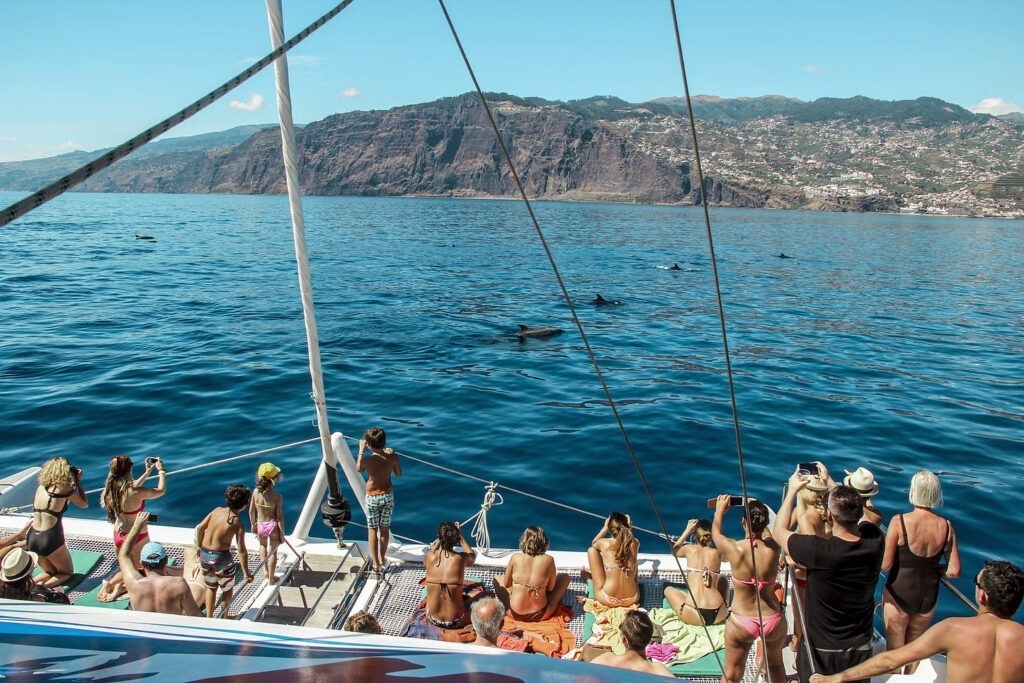
Beyond Madeira curates water activities from selected local partners — snorkelling tours in the Garajau Marine Reserve, kayaking along the south coast, whale and dolphin watching from Funchal Marina. We don’t operate activities directly; verify meeting point, cancellation policy, and payment method on each activity page. Cancellation is generally possible up to 48 hours before for a full refund. Most activities are paid on the day — if you’d prefer to pay in advance, get in touch via WhatsApp or email. All bookings include free access to an interactive offline map, particularly useful for north coast and interior spots where GPS can be unreliable.
Browse Water Experiences → 3-Day Itinerary →