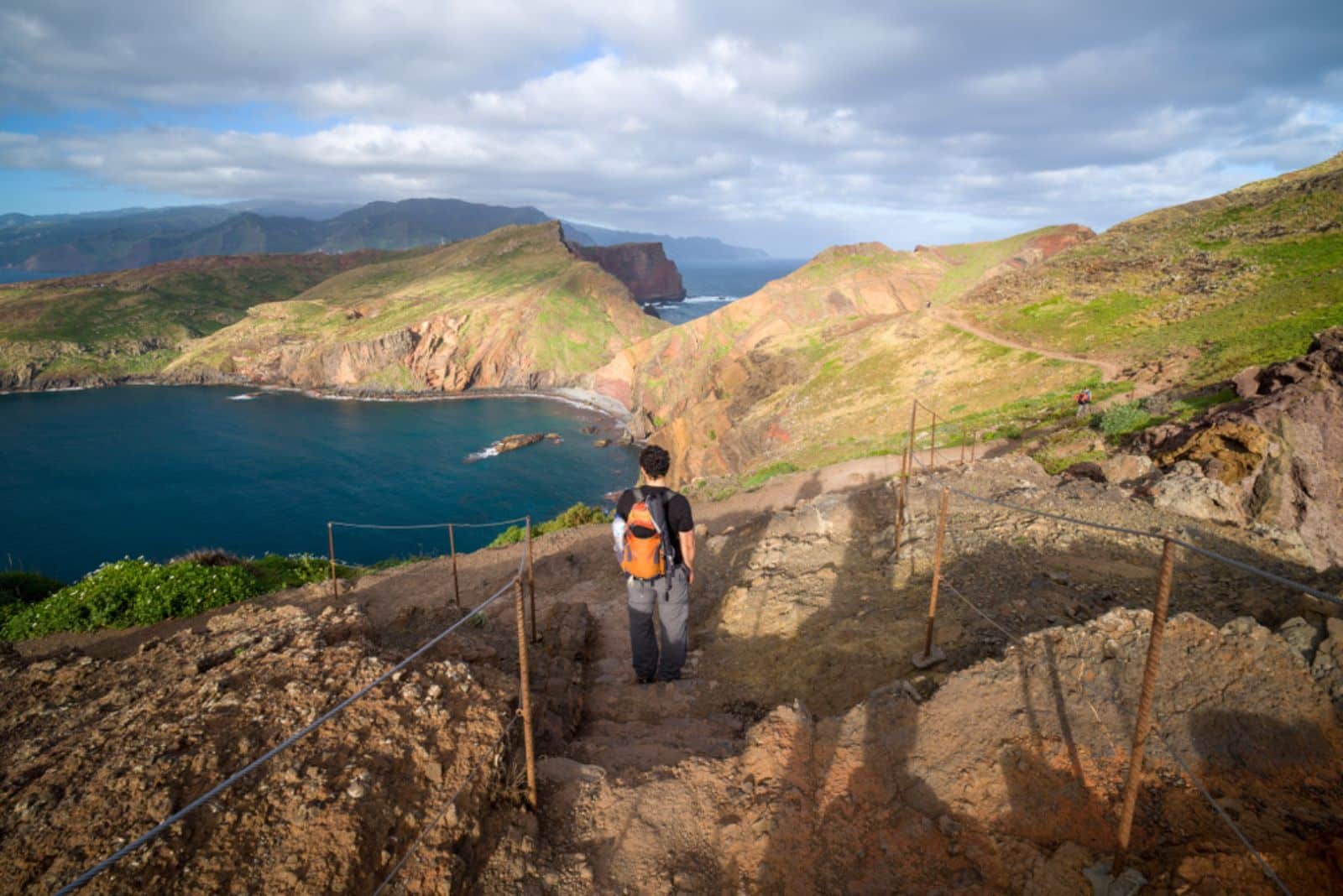

From January, all 42 official walking trails in Madeira will require advance registration, limited 30-minute time slots and paid access for visitors. Independent hikers will pay from €4.5 per trail, guided visitors with protocol operators pay €3, and the Pico do Areeiro–Pico Ruivo route, reopening in April, will be the most expensive.
The Regional Government is introducing a new way to manage Madeira’s official trails: mandatory reservations, capacity limits in 30-minute slots and six special “park” zones in the most visited natural areas, including Pico do Areeiro, Ponta de São Lourenço, Rabaçal and Fanal. Access fees are now confirmed from €3–€4.5 on most routes, with higher prices on Pico do Areeiro–Pico Ruivo once it reopens.
- 42 official trails will require an advance reservation and a specific 30-minute time slot.
- Independent visitors and non-protocol operators pay from €4.5 per person, per trail.
- Guided hikers with RNAVT/RNAAT operators that have an IFCN protocol pay a reduced €3 per person.
- Madeira residents registered on SIMplifica have free access but must still book a slot.
- After reopening in April 2026, Pico do Areeiro–Pico Ruivo will cost €7 via protocol operators and €10.5 for the general public.
All official trails will require reservations and time slots
Starting in January, all 42 recommended walking trails in Madeira will only be accessible with an online reservation and a confirmed time slot. Entries are organised in 30-minute blocks, with a maximum number of people allowed per slot to avoid heavy crowding at specific hours.
Access is now paid for most visitors, with a minimum fee of €3 or €4.5 per person depending on how you book (guided tour with protocol operator, or independent visit). Madeira residents registered on the SIMplifica portal remain exempt from payment but must still reserve a time.
The maximum number of hikers per trail is based on studies by the Tourism Observatory of the University of Madeira, which analysed carrying capacity, safety and environmental impact together with IFCN.
According to the Regional Government, the overall daily numbers were within recommended limits, but crowding at peak hours was harming both the experience and the territory. The new system aims to spread visits more evenly between sunrise and sunset.
Pico do Areeiro–Pico Ruivo: reopening in April as the top-priced route
The legendary Pico do Areeiro–Pico Ruivo trail, which links two of Madeira’s highest peaks, is expected to reopen in April 2026. Within the new system, it will be the most expensive of the 42 recommended routes.
Once it reopens, access prices will be:
- €7 per person for visitors hiking with RNAVT/RNAAT operators that hold a protocol with IFCN;
- €10.5 per person for the general public and for operators without a protocol.
Until PR1 reopens, the standard values of the other classified trails apply (that is, €3 with protocol operators and €4.5 for independent visitors).
These amounts may still be fine-tuned in future regulations, but they are already defined in the official IFCN pricing table for 2026.
New “parks” in the most popular nature areas
Alongside the reservation system, the Regional Government will create six special zones linked to the most visited nature spots on the island. Each one will be managed like a small park, with its own rules and capacity limits:
- Pico do Areeiro
- Ribeiro Frio
- Queimadas
- Ponta de São Lourenço
- Fanal
- Rabaçal
These areas will have controlled entries, dedicated parking management and clearer rules for the types of activities allowed. Parking will also be reorganised in a second phase, with cars likely moved away from the most sensitive spots.
The Government stresses that the main issue is not “too many hikers”, but too many cars at the trailheads. Priority may be given to licensed operators who carry more people per vehicle compared with individual visitors in private cars.
Reservations, payments and enforcement
Trail access is managed through the SIMplifica portal, a mobile app and an updated website of the Instituto das Florestas e Conservação da Natureza (IFCN). Hikers choose a trail, select an available time slot and pay online when required.
In the transition phase, visitors who arrive at a trail without a reservation will find staff on site with payment terminals. If there are still free places for that particular time slot, they will be able to proceed with the hike after registering and paying on the spot.
Besides controlled entry points, there will be patrols along the trails, and fines will apply to those who enter without a valid reservation or who ignore the new rules.
The Government is reinforcing teams in the field and may subcontract additional support for maintenance, visitor assistance, monitoring and safety when needed.
Who pays what: residents, guided hikers and independent visitors
Field studies suggest that less than 2% of local residents regularly use the recommended trails. Even so, Madeira residents who register on the SIMplifica portal will be able to continue enjoying these routes without paying any access fee — but they must still respect capacity limits and reserve time slots in advance.
For visitors, the confirmed model for 2026 is:
- €3 per person – for guests walking with RNAVT/RNAAT operators that have a protocol with IFCN.
- €4.5 per person – for the general public and for operators without a protocol.
- €7 / €10.5 – special prices for PR1 Pico do Areeiro–Pico Ruivo after it reopens (protocol vs. non-protocol).
These amounts are charged in addition to any guiding or transport fees you pay to tour operators. According to the authorities, the revenue from paid access will be reinvested in trail maintenance, conservation, information, reservation systems and enforcement.
Planning the Pico do Areeiro–Pico Ruivo hike after April
If you’re planning to visit Madeira in 2026 and want to include the Pico do Areeiro–Pico Ruivo ridge walk, it’s worth keeping a few things in mind:
- Book your slot as early as possible, especially for sunrise, weekends and peak season.
- Consider early morning or late afternoon starts to avoid the busiest times.
- Always check the weather forecast, official alerts and live webcams before you drive up to Pico do Areeiro.
- If you don’t want to drive yourself, look at small-group tours with pick-up in Funchal that already include the trail fee.
We’ll continue updating this page as IFCN publishes more operational details or adjusts capacities and prices.
Plan your Madeira hikes with Beyond Madeira
If all of this feels like a lot to keep track of, you don’t have to do it alone. Use our free tools and local expertise to build a realistic, stress-free itinerary that fits the new trail rules.
Check conditions live
See what the weather looks like in Funchal and in the mountains before you leave your hotel. Perfect for last-minute calls on hikes, viewpoints or coastal plans.
Open Madeira live webcams →Build your Madeira itinerary
Combine hikes like Pico do Areeiro–Pico Ruivo with levadas, viewpoints, villages and ocean experiences. Start with our curated guides and interactive map.
Explore the interactive Madeira map →Join small-group tours
Prefer not to drive or deal with trail logistics? Our small-group experiences include pick-up, local guides and carefully chosen stops for views, food and photos.
See our tours & experiences →Rent a car with no stress
Want full flexibility to catch sunrise at Pico do Areeiro or explore remote trailheads? Rent a car with no deposit, no credit card and insurance already included.
Check Beyond Madeira car hire →